Passion Projects

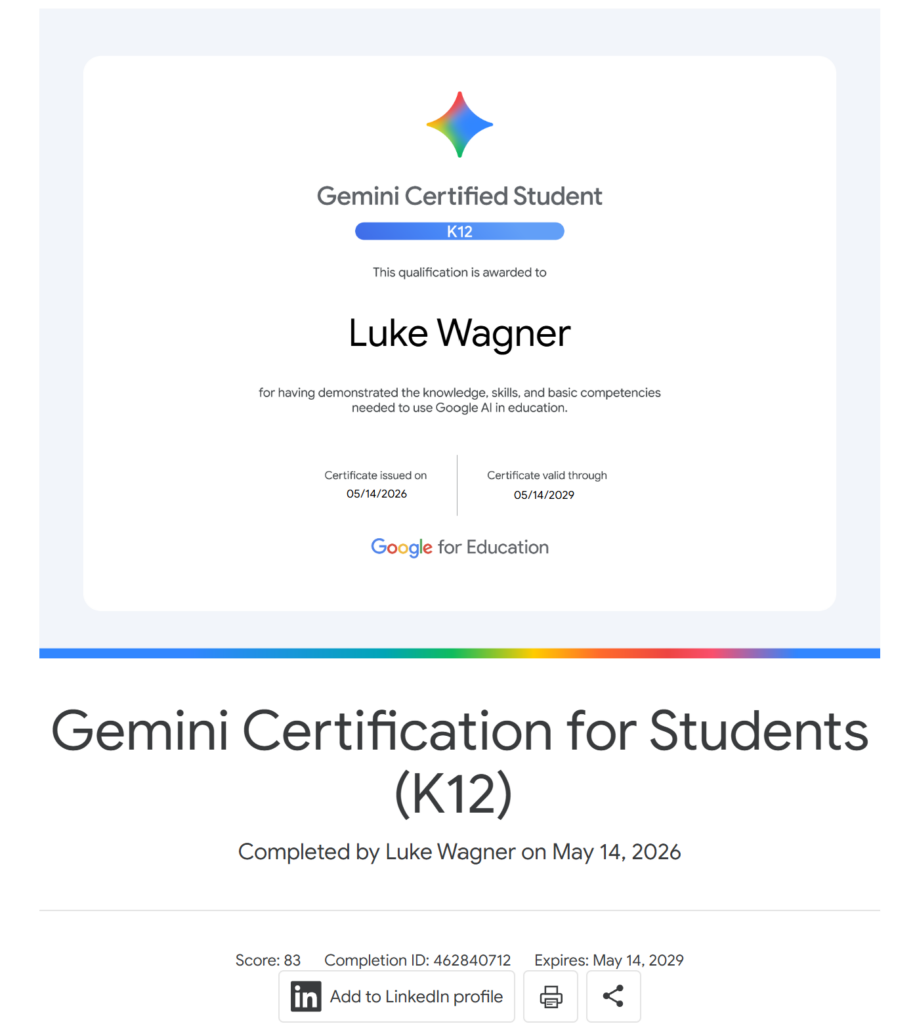
Gemini Certification
Physics Bird Call Presentation With Excel
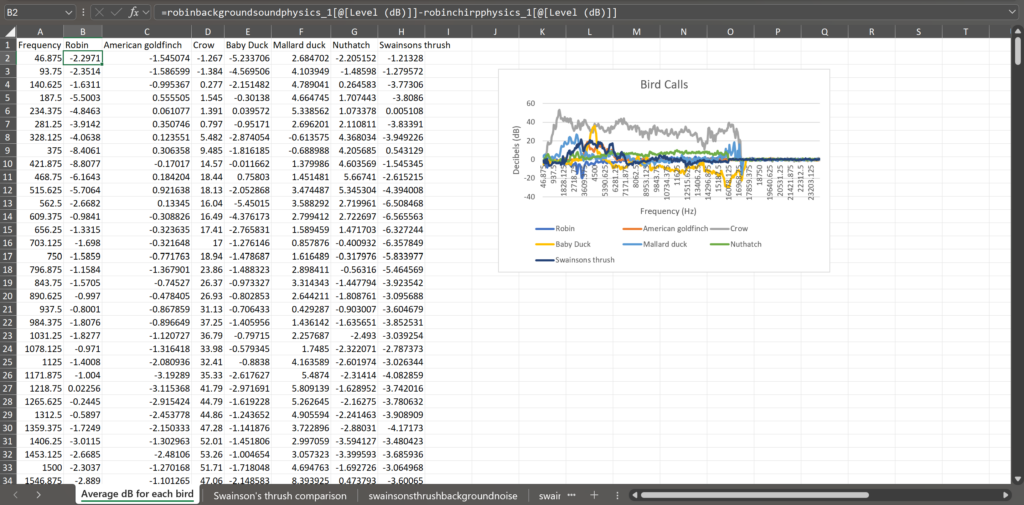
Here is the excel sheet I created for my physics bird call project. For each bird species, I imported the text file of the call, along with a snippet of background noise. Each file had over 500 data points. Using excel, I was able to subtract the decibel value of the background noise from the call, leaving just the sound of the chirp with no other sounds. With skill I learned in this class, I was able to make such data analysis easy, and create clear, easy-to-read graphs alongside the numbers.
AI Exploration Unit
- Macbeth Essay Studying

https://chatgpt.com/share/69aefcf2-0194-8008-89b3-f7461eae4a82
Using ChatGPT, I was able to study for my Macbeth essay. Through multiple prompts, I parsed out the themes of the play and character changes for the main characters throughout the course of the story. Using this information, I was able to deepen my understanding of what we did in class and understand the timeless lessons of the play. More generally, this use shows an extremely helpful use of AI. This use of AI is ethical because I am not sacrificing my own learning. What was given by AI is very similar to what a teacher would say if I were to have a conversation with them. AI only supplements my learning and allows connections to be made – it does not do the learning for me. I can see this use being very useful for future studying and projects.
2. OE Graduation Requirement Trip

https://chatgpt.com/share/69a9e272-3460-8008-adc3-acff58549222
Another great use of AI is trip planning. In June, I am going to Saskatchewan with my friends (where I spend every summer), and hope to fulfil the Outdoor Education graduation requirement. Although I know the area very well, I was hoping to create a specific plan that would work. By adding the document explaining what is needed and a sample trip document, I asked ChatGPT to create a one-night plan. The itinerary was great, incorporating exercise, skill improvement, and learning about the history of the area. This proposal would have taken me hours to write, but instead AI was able to create a plan in seconds. Once again this scenario is a great use case. The proposal is not for marks or learning, so using AI is just fine. It has great ideas for activities because it can pull information from many sources.
3. Las Vegas Trip Planning

https://chatgpt.com/c/6991558b-1038-832d-8b9d-4a24e8c28be6
AI can also be useful in planning trips. I wanted to create an itinerary for a Las Vegas trip this spring break. It would have been difficult for me to create an itinerary, as I would have to do a lot of research to find the best activities. AI can read these websites in seconds, and find the best information. Using this, it can create a plan that I am able to modify based on my preferences. It even recommended hotels based on what I wanted to do. This use-case is very time saving. A barrier sometimes for planning trips is the amount of time it takes to do research, find the best deals, and come up with an itinerary. AI cuts down that time completely, and due to its wider range of information it has access to can create a better plan. It even included pictures and an interactive map. The opportunities for such a use case is great. It may even eliminate travel agents in the future because of how easy it is to use.
4. Biology Test Studying/Clarifying Understanding
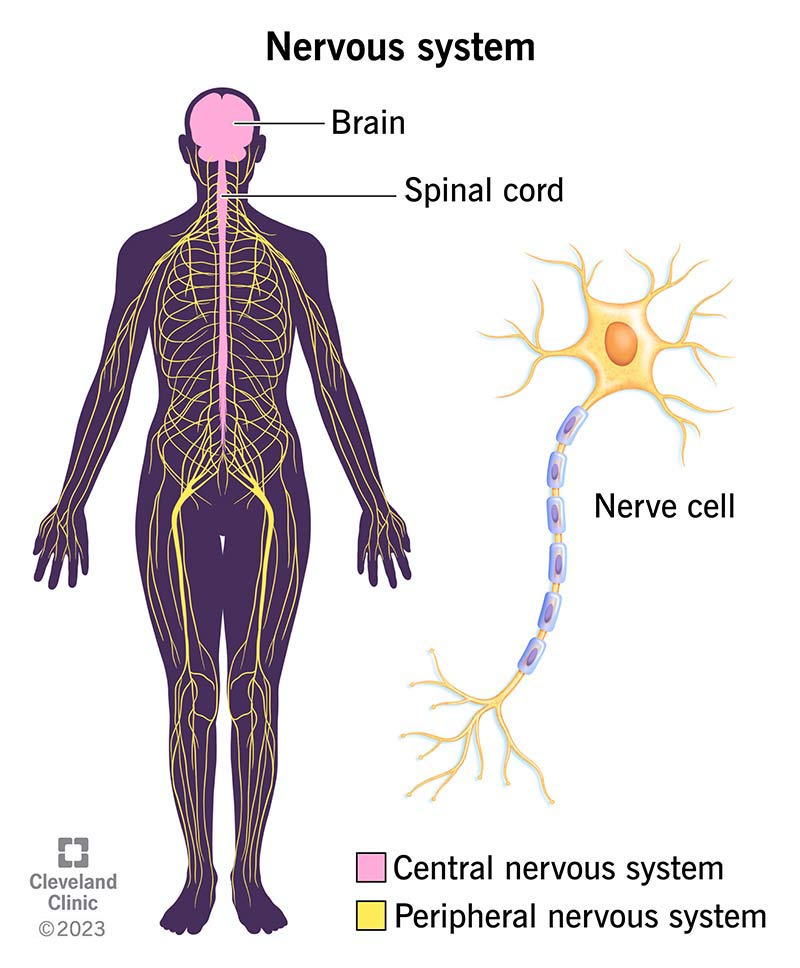
https://chatgpt.com/share/69b19d1e-69d8-8008-a93b-fee6015780df
This interaction was helping me study for my Biology test. I had already gone over the material and studied myself, but there were a few small details that I did not fully grasp. Because I already knew most of the material, I was able to use detailed prompts. AI was very helpful in this regard because it was able to explain with tables and paragraphs a learning that would be very hard to find through simple google. This use-case is a great idea, because due to AI having a wider reach of information to pull from, I was able to get the best understanding possible. I am still just discovering the full usefulness of AI, but from my early understanding I can see the great benefits for learning.
5. Growing Crystals for Chemistry Class

https://chatgpt.com/share/69b1a16b-a2b8-8008-bc4b-dd8426c9511e
For chemistry class, we have to grow a crystal for our year-end project. I had attempted to grow a crystal, but due to various issues with saturation it failed. All the websites I visited had conflicting amounts of salt to use to grow the crystal. With that, I turned to ChatGPT, which was able to produce a step-by-step guide with specific amounts and tips. So far the tips are working, as the crystal is growing at home. Although growing crystals is a fairly niche topic, it is easy to see how AI can be useful in other at home activities. For example, AI would be able to make a recipe with ingredients and cooking steps for any food, which is very valuable for new cooks or more experienced people who want to learn new things. AI also eliminates the need to spend time thinking about what to cook, as you could input what ingredients are in your house and it could generate meal ideas. This is another great use case for AI, because it can save time and effort.
6. Researching Local Universities

https://chatgpt.com/share/69b1a4b5-ec10-8008-a1a3-48616c2abcee
I wanted to learn more about local universities and the transfer programs from smaller colleges to UBC. Due to a lack of recent information on the specific websites, I turned to AI. Using detailed prompts, I was able to learn a lot more information than what was readily available at first glance on google. This shows the benefits of AI – it is able to filter through so much information that a human would not be able to discover. Although some advice may be slightly inaccurate, the sheer amount of data it can find is incredibly useful. I can see the usefulness in this for the future too – next year I could use AI to find scholarship applications. I was wondering specifically about courses needed for UBC sciences, as I want to study that. ChatGPT was even able to make a table comparing the exact UBC replica courses offered at Corpus Christi.
7. Math Practice
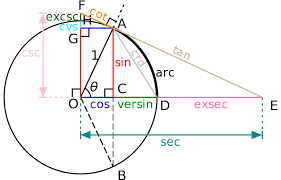
https://copilot.microsoft.com/shares/ziPgJL5UtBAjvkSHNqN1K
Some AI tools have different strengths than others. I have learned that Copilot is especially helpful for math questions. It is able to very well explain steps to solve a question that make understanding clear. I have been using copilot throughout the year to help me solve practice questions. I first attempt the question, and if I get it wrong and do not understand what I did wrong, I input the question into copilot. Over time it has learned my preferences and preferred method of solving, which has allowed even more use. This use case is helpful in saving time – before AI existed, you would have to either email your teacher the question or find a youtube video doing a similar question, both of which take valuable time. It is even useful to input the question and learn the technique to solve it in order to find out whether I even have the tools to solve the question. If I look at the answer and see equations or techniques I do not understand, I know that I can move on from the question – the only other way to figure that out would be the teacher telling me or eventually giving up in despair.
8. Physics Question Solving
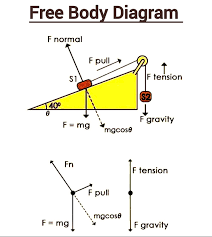
https://docs.google.com/document/d/1XSmqGFtb8Ahb3jOR8Ws1YYoA2CFInlcFl0JOpRuqix4/edit?tab=t.0
As you can see, this link is a google docs. After asking it to solve a question, I discovered that the response can be translated into a google docs. Although some things did not translate over, if the small issues can be fixed this could be very useful in many areas. Making a document allows other people to edit it, and having a premade template to use would be very useful in saving time and creating efficiency. The conversation with AI that led to this learning was about a physics question. I have found that Gemini is the best for physics problems, as it knows the formulas and how to apply them the best. I was even able to tailor the calculations to the formulas I knew, in order to determine how I would have solved the question myself if I understood how. This could help make further questions easier too. Gemini was even able to create a table of values, something other models could not. This is similar to the last use case, in that solving difficult questions using AI saves time and deepens understanding.
9. Integrated Sciences UBC Research

https://chatgpt.com/share/69b375c7-06fc-8008-b1f9-908d46e4a840
I used AI here to discover the courses I would take at UBC if I were to be accepted into Integrated Sciences. I also was wondering about the major choosing and what courses I would need to take in first year, and the average I would need to get in them to be competitive for my preferred major. It is near impossible to find all this information in one place on the internet, or quickly, so AI is very useful here. All the information is able to be gathered into one area and translated into lists and easily read paragraphs. AI would likely be able to get this information about any other university too, which could be a great supplemental source for someone in grade 9 or 10 who is just starting to research universities they may want to go to. I also predict AIs proficiency in this area could be extrapolated to something like job research and future planning.
10. Calculating my current average in comparison to UBC admission averages

It is hard to calculate a straight predicted average for certain universities because of the different weighting of some courses, so I turned to AI in order to try and help me calculate. I inputted my rough current marks, and it was able to calculate my average and compare it to known UBC admission averages. It even mentioned the personal profile aspect to admissions, highlighting that a strong personal profile can strengthen an application a lot. Right now, this ability is extremely helpful. I can calculate my average, but the admission average is not simply the 7 courses that I am taking this year, so the ability for a tool to calculate it for me makes it much easier to have a clear understanding of what courses I need to potentially raise my average in, or what average I need to maintain in order to be competitive for admission. I could also see this subjective calculation ability of AI to be useful for calculating a numbered average using proficiency scales, because at this point it is hard to calculate yourself due to different weightings for recency and consistency.
11. Office Design Ideas
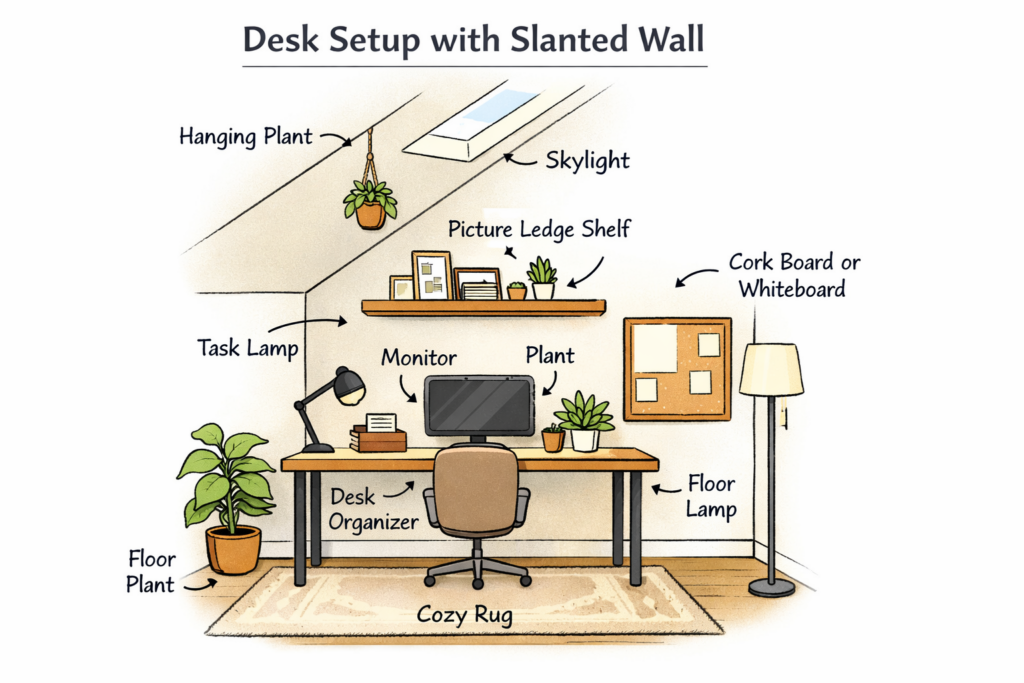
https://chatgpt.com/share/69b37eee-8f20-8008-ac9d-d91fb45b3476
I am trying to spruce up my office space, so instead of spending hours watching youtube videos or reading articles on interior design, I asked for some practical tips from ChatGPT on how to make it more cozy and less utilitarian. I was even able to explain the specific room design (the generated photo is not completely right in that regard), and it was able to give suggestions based on that and my preferences. This demonstrates that AI can be very useful for design tips. If it could make suggestions on an office space, it would likely be able to give tips for house design or other subjective artistic uses. This shows how much AI has improved over time, as when it was released it for sure could not have made an image of this quality or such useful tips.
12. Workout program to strengthen posture and upper body (against tech neck, heavy backpacks, being tall)
https://chatgpt.com/share/69b38518-08bc-8008-abcb-4a9565edd176
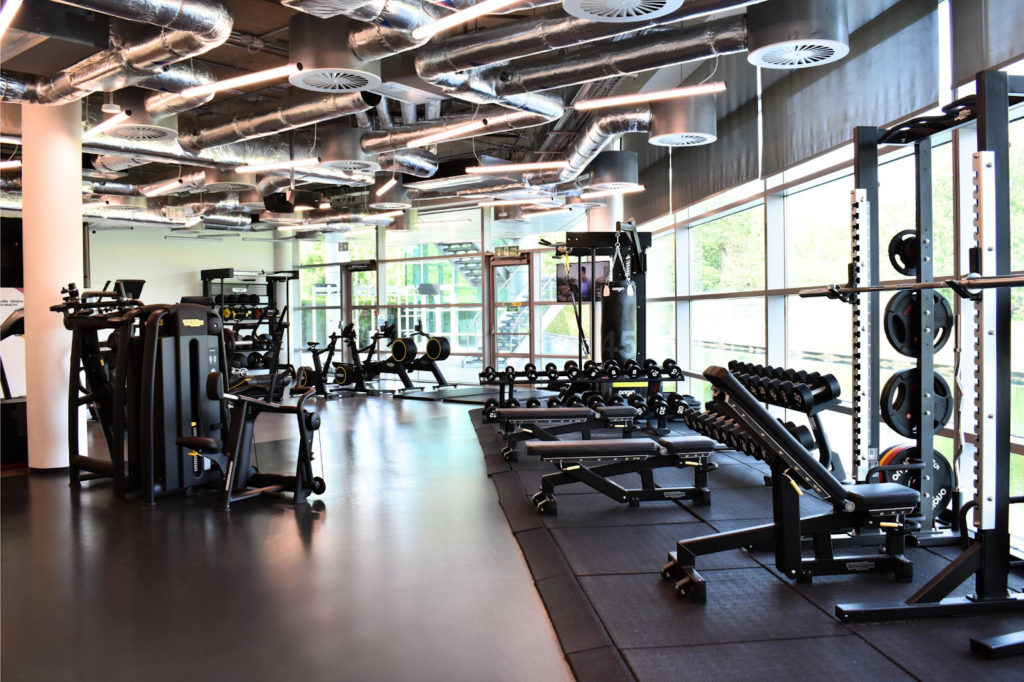
I wanted to make a tailored workout plan for me to strengthen my upper body and posture, but there were few sources that gave exactly what I was looking for. I then asked ChatGPT to make me a personalised, easy to implement workout plan. It was able to generate specific exercises, how to do them, and the number of sets and reps I should aim for. It was especially helpful that the exercises required little equipment, allowing them to be done at home if necessary. In this technology age, such a use-case could be very helpful to prevent injury and save money. Before AI, you would have to hire a personal trainer or spend hours surfing the internet or talking to people to find exercises that would work for you. Instead, you can save time and money by using AI. I can see other uses for this too – you could create a plan to manage an injury or train for a certain goal (more on that later), and learn certain exercises with the equipment you have access to.
13. Training to reach my goal time for the April Sun Run

https://chatgpt.com/share/69b38bf5-54c0-8008-a478-69ba4b797bfb
I am trying to train for the Sun Run, but it is hard to make a specific plan that maximizes speed but also distance due to my relative lack of experience. I then asked ChatGPT for help. By inputting my goal time and current time, it was able to create a specific plan to reach my goal in the 6 week timeframe until the run. AI was even able to give me tips for the run itself to cut off time (thinking of it as 3 separate races and running inside the turn to save distance and therefore time. When further asked, Chat made a specific, achievable plan for each day until the run. Similar to my last use-case for AI, the ability to create specific and customizable plans is useful for learning and efficiency. I feel that this is a not well known use of AI (many people default to solving practice questions or making a piece of writing), but has the potential to improve many people’s fitness who do not have access to other resources – both running and ChatGPT are free after all!
14. Vancouver Auto Show Car Research

https://chatgpt.com/share/69b4333a-4a34-8008-afb7-033bfc8c995b
I will be attending the Vancouver Auto Show later this month, and am currently researching cars to buy for Saskatchewan. We own a boat there, and currently our car is not powerful enough to tow it, which makes winter take out and spring put in difficult. Instead of reading dozens of subjective articles and reviews, I used ChatGPT to give me suggestions. By adding my specific needs, I was able to get tailored suggestions based on the possible uses I have and where the car will be driven. This use is another example of AI saving a lot of time for you. In the past, you would have to spend weeks or months researching the best car for your needs, and then test-driving 5-10 or more. Now, you can ask AI to narrow down a list for you, allowing you to cut down research time and only test-drive 2-3 cars.
15. AI in Shopping

https://openai.com/index/chatgpt-shopping-research
Rolled out last year on ChatGPT, users can now get tailored suggestions for a product they are looking to buy. By asking specific questions such as “narrow down between these three items based on ____”, you can get specific, evidence based answers based on internet research and review reading. Over time, as you use it more, the model will become tailored to your specific values/personality, and get better at suggesting things you will like. By asking questions, the AI model can become just like a retail worker. It will give you suggestions based on your needs, and pulls “accurate, up to date details from high-quality sources”. ChatGPT will even make tables comparing and contrasting different products, and give links to the retailers websites. According to the OpenAI website, it can even find product deals and similar things to what you were asking for.
I feel this development has the potential to be quite significant for the retail industry, although the true impact will always be limited due to a need for physical stores. AI could replace retail workers, but the scope would not be far beyond that. I think that AI could replace these workers fairly easily, because it has access to much more information than the average person. It would be especially useful to replace younger people with a lack of experience, as sometimes they know almost nothing about the store they work at and would be unable to give optimal suggestions due to that smaller knowledge base. One factor that AI in this regard would be useful for is online shopping. Other than from your own experiences, it can be hard to shop online due to a lack of information. AI could integrate into the online websites and give tips and specific product specifications. I can also see this being useful for other sectors, such as market research. By scouring the internet, AI could give advice and analyze patterns better than the average person. This brings out the main advantage of AI – it can be wrong sometimes but because it has access to so much information it can be extremely useful for a surface-level question that is not difficult, but is time consuming due to having to find a lot of information.
16. Will AI take our jobs?
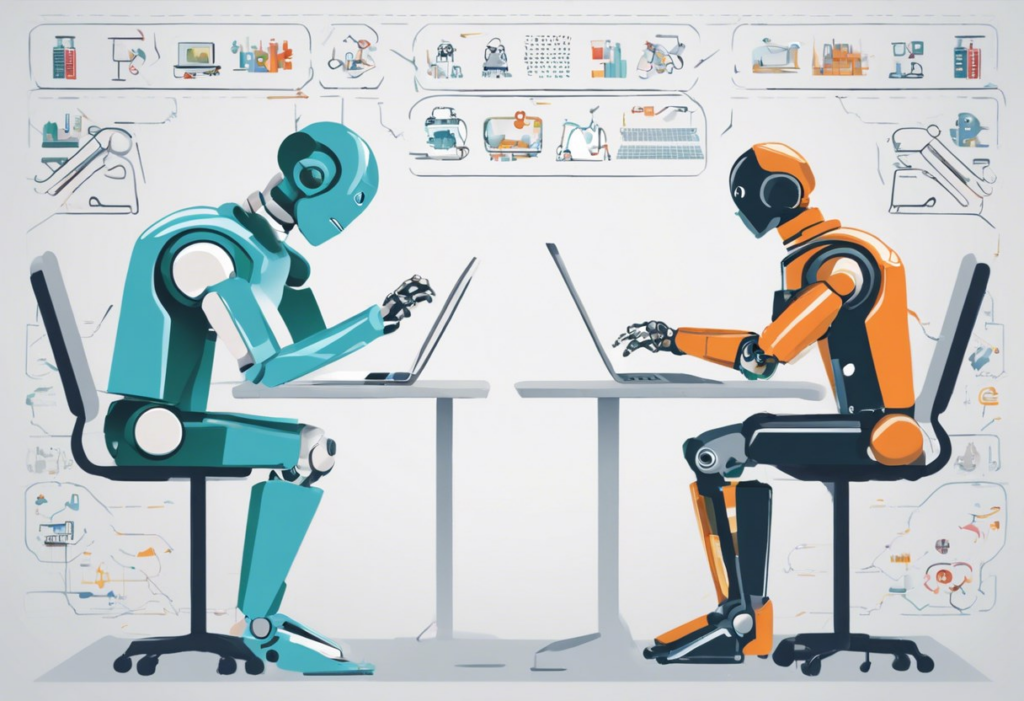
A common fear about AI is a lack of jobs. With strides being made in AI responses, entry-level jobs are at risk – a crucial point for young people. This is problematic because without as many entry-level jobs, young people cannot gain experience in order to become better in their field. According to the article, this may be a premonition for the rest of the economy. For years, silicon valley has been a template that others try to model off of. Companies had small perks such as free lunch and unlimited vacation days. Now though, the culture has changed. Many young people are working “996” – 9 am to 9pm 6 days per week, or sometimes even up to 16 hours per day. Although this is a problem in itself, the changing “vibe” of technology in San Francisco is changing. Startup workers now have more anxiety about the economy and AI. People are caught in between – going “all in” on AI even while wondering if AI is actually a bad thing? Also now with AI, there are more people wanting jobs. Thus companies like meta, google, microsoft etc. are less afraid of losing workers, so scaling back on perks. This lack of care for employees is then making people put in more work in order to differentiate themselves from others and make sure they still have a job as AI continues to develop. Not everyone is afraid of this though – many people feel that AI is extraordinary and the jobs will adapt. It is hard to know who has the right opinion, because AI is still so new. This is why people are working more – they need to keep up with a very fast-changing area. This volatility is also why jobs are becoming more difficult to find. To get a job in the sector, you must differentiate yourself from others by “doing something cool” like building a new product.
These fears also lead to the question of what other jobs will be replaced by AI. What jobs in other sectors will be affected? In my opinion, I think it is difficult to tell how AI, an inherently fast-moving and volatile market, will shape other areas. Although we do not know how the economy will change, there are some things people can do to protect themselves. Now is not the time for complacency. Continue to put work into your jobs and learn. Only the most entry-level jobs at this time are at risk of being replaced. Senior positions that come with decades of experience are unlikely to be affected, because time cannot be replaced by AI. Also, more senior positions involve interpersonal relationships, subjective decision-making, etc. that AI will never be better at than us. I think that due to fear of the unknown, AI “taking over jobs” has been blown out of proportion. I feel that we do not know enough about the technology, so thus we fear it. I am sure that in the end it will all turn out alright – AI will integrate into our lives, but it will not prevent people from achieving what they want or finding work.
17. What is a CubeSat and Why You Will Be Hearing More About Them
Luke Wagner ‘27
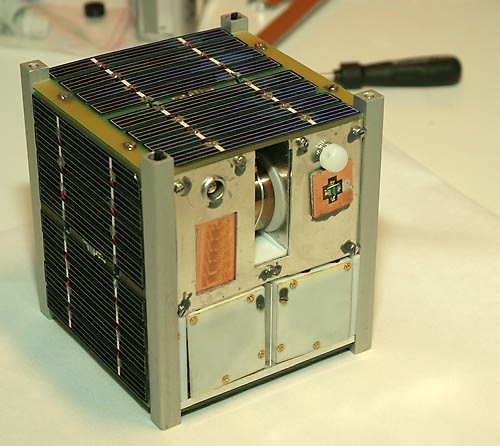
Cube satellites are tiny (10x10x10cm), powerful satellites that allow hands-on building of space hardware. Due to being very cheap, they are the perfect way to foster innovation and help address Canadian challenges such as monitoring climate change far up north where there are few people. These tiny satellites are already making a difference in Canada:
- Kepler communications, a U of T company similar to Starlink, has started to use CubeSats to build a global internet network.
- ArcticSat: A project founded by Dalhousie University and the northern community of Chesterfield Inlet aiming to provide sea ice data. This data is vital to make sure the yearly shipments of food and supplies are able to make it to the community safely. Fun fact: there is a Netflix series called “High Arctic Haulers” addressing exactly this problem and how even one mistake or unforeseen storm can cause people to go hungry.
- Students and companies in Western Canada are trying to grow CubeSat development in order to monitor Canadian terrain. This is especially important for B.C. because of our topography which interferes with signals.
Additionally, there are a few companies here in BC developing larger, more technical satellites. First, there is MDA Space, a global leader in communications and robotics headquartered in Richmond, who are trying to advance space robotics and satellite systems. Local universities are also joining in on satellite projects – UBC is building an Earth observation satellite called ALEASAT to support disaster relief, and UVic, in collaboration with UBC and SFU, is making a satellite called MARMOTSat to image the Earth, its oceans, and the atmosphere.
Cube satellites mark a major shift in the global space sector. Until now, only large companies were able to send up satellites and record data. Now, with a more accessible way for companies to get into the market, we should see a boom in technological advancements in this area. With more competition, everyone’s technology will become better, turbo boosting this sector. I hope that people continue to use cube satellites and make similar inventions, so we can unlock better monitoring for climate change, weather, etc.
Other provinces are also starting to develop their own unique satellites – Alberta has already built two satellites to measure wildfire spread, and is currently working on developing a solely student-built satellite called STEVE to study auroras and space. Saskatchewan is also developing a homemade satellite used to ‘collect experimental radiation data from orbit’.
These company spotlights and technological advancements give us a glimpse of the possible future of satellites. There are endless possibilities for measurement and monitoring that could help give early warning for natural disasters and find ways to reduce climate change.
But CubeSats are not without their problems – they are not a complete solution yet. Canadian space regulations still call for all satellites to have mechanisms to exit the orbit of Earth, propel themselves to prevent collisions, and they need to be proven to be durable and reliable before being launched. These constraints will be very difficult to achieve for such small satellites, and defeats the purpose of them. If such rules have to be met, the cost effectiveness and ease of use will be eroded. The US has already changed laws in order to allow CubeSats to have less stringent rules due to their small size, but Canada has yet to follow suit. In order to keep up with the rate of innovation of these satellites, we need to change our laws. I also think the sector could benefit from some government funding. This area is likely going to have a fast-growing market, so these changes would ensure that Canada remains a leader in the field.
Overall, I am excited to learn more about this technology as the limits are pushed. I feel that this market has a large untapped potential that could foster great change in how we monitor various natural things. If we are able to change regulations, CubeSats could unlock a lot more innovation and allow fresh perspectives into the space sector. I hope that we will be able to fix the few problems that come with the satellites and allow a multitude of opportunities to be opened up.
18. A World on Edge
In March 2026 the United States and Israel attacked Iran and Iran retaliated against Israel. Since that time, all over the news there are videos of missiles being launched, streaks of flame in the air, fires where they land, and people screaming. Some missiles get through to their targets but many are shot down in mindair. But how does a missile work, and what are the complex systems in Israel that shoot them down?
Let’s start with the science behind the missiles. At first glance, they seem to be simply metal tubes with an engine. But internally, they are much more complicated. The Oxford definition of a missile is “a self-propelled weapon that carries an explosive warhead and is directed by remote control or internal equipment, launched from the ground or by an aircraft or submarine.”Crucially, missiles are different from rockets because they are guided – not just launched in a general direction. This makes missiles many times more dangerous, as specific targets can be picked and struck with an accuracy of as close as 5-10m.
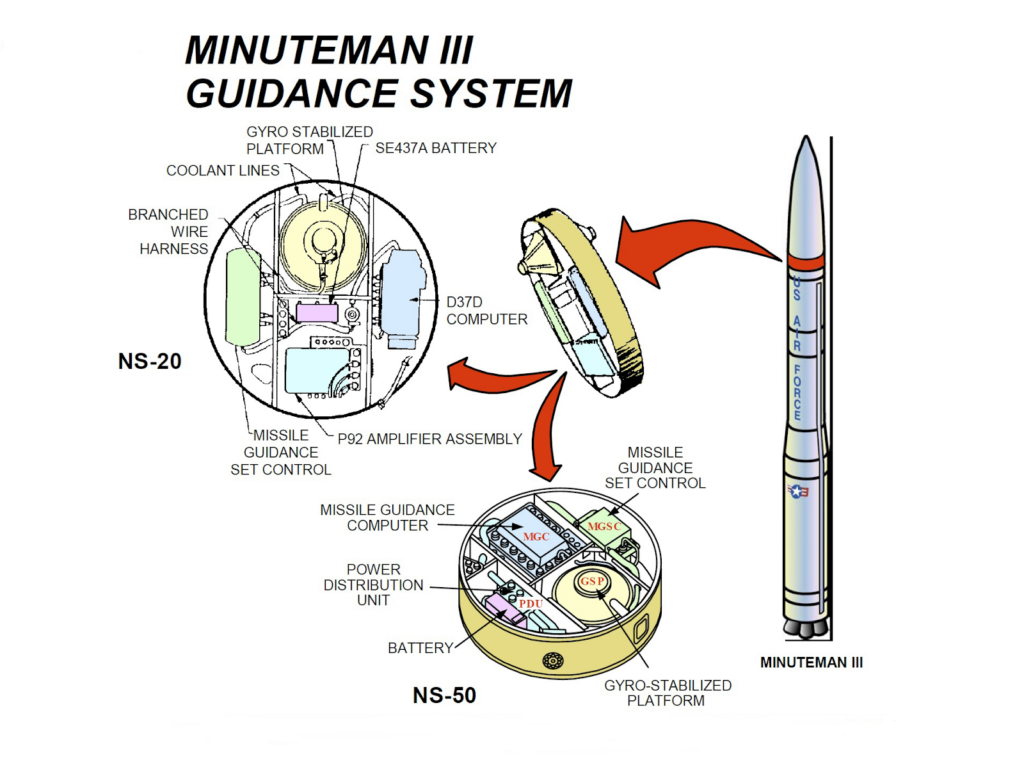
Intercontinental Ballistic Missiles, or ICBMs, are the most deadly kind of missile. They can travel up to 24x the speed of sound (for context, that means it would take less than 30 minutes to fly from Russia to Canada), and can carry nuclear warheads. Once launched, ICBMs use “inertial navigation systems (INS) using gyroscopes and accelerometers to track position, velocity, and orientation without external signals”. Some modern missiles even use navigation by the stars.
Taking a step back from this incredible technology, it is amazing how far we have come. Imagine showing this missile to someone from the 1500s and telling them that it can fly on its own across the world in 30 minutes. I think it would be incomprehensible.
One problem with ICBMs is that they are very expensive. The next generation being developed by the United States is expected to cost over $200 million per missile (Military Watch Magazine, 2026).
There are also smaller, cheaper missiles. These are used to destroy aircraft or buildings in relatively close range, which allows them to be much less costly and complicated. But they aren’t perfect. In Kuwait recently, three American F-15s were shot down by Kuwaiti air defense in a “friendly fire” mistake. Luckily all pilots safely ejected (Hagagy et al., 2026). This incident shows the dangers of cheaper missiles as they are simply heat-seeking, which can lead to the wrong target being chosen. This issue is exacerbated by the fact that thousands of other missiles, planes, and drones are in the same airspace. You can see how it might be hard to tell friend from foe.
Is it possible to defend against these weapons? The answer is yes. For example, Israel’s Iron Dome. Using complex mathematical calculations, the system fires an opposing missile when it detects an enemy one heading towards a populated area. The system is very effective, with a success rate of over 90%, but the system is being challenged to keep up with the sheer number of missiles being fired.
Nowadays a cheap drone can disable a million-dollar tank. It is getting harder than ever to defend against attacks. As CBC said, now “the defender has to be perfect but the attacker just has to be lucky.” (Canadian Broadcasting Corporation, 2026).
In our own country, Prime Minister Carney has committed to increase defense spending to 2% of GDP, or $63 billion (Canadian Defence Review, 2025). For too long, we have relied on the U.S. for major weapons systems. With our ally the United States becoming unreliable, it makes sense for Canada to develop more of its own capabilities. We should do so.
References
Canadian Broadcasting Corporation (Writer). (2026, March 08). Iran names new supreme leader [TV series episode]. In CBC News: The National.
Canadian Defence Review. (2025, November 4). Canada releases Budget 2025: Canada Strong – Defence Spending. Canadian Defence Review. https://canadiandefencereview.com/canada-releases-budget-2025-canada-strong/
Hagagy, A., Choukeir, J., & Stewart, P. (2026, March 2). Kuwait shoots down US jets in friendly-fire incident, US CENTCOM says. Reuters. https://www.reuters.com/world/middle-east/kuwait-intercepts-hostile-drones-third-day-iran-retaliatory-strikes-2026-03-02/
Military Watch Magazine. (2026, January 30). Continued Cost Overruns and Delays to Urgently Needed Sentinel ICBM Undercut U.S. Nuclear Triad. Military Watch Magazine. https://militarywatchmagazine.com/article/further-severe-cost-overruns-sentinel-nuclear
19. Drones: changing the course of military history
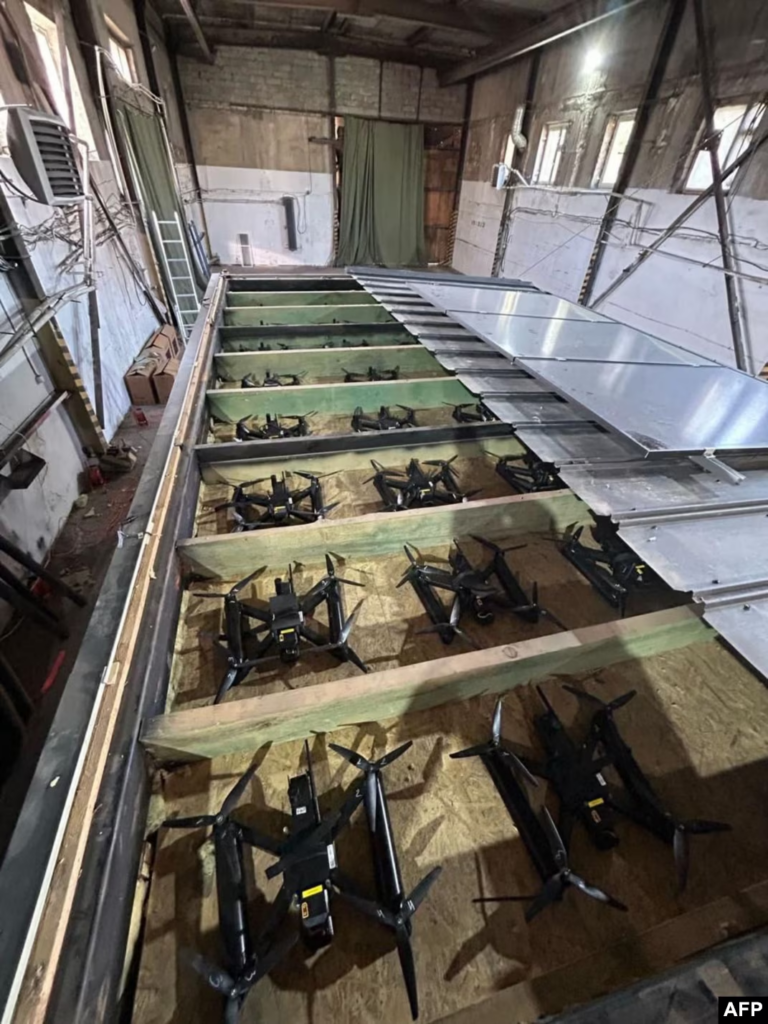
At the start of June, Ukraine completely surprised Russia with an attack that nobody saw coming. The attack began just before Ukraine and Russia were to have peace talks in Istanbul. The temperature on the talks was already heating up with pressure from the United States. The attack was called Operation Spiderweb, and took over a year and a half of planning. It involved 117 drones that were driven by trucks to remote Russian air bases. The furthest base was over 4500km from Ukraine’s border! Upon reaching the target, the truck’s roof was remotely opened, releasing hidden drones. In total, the drones set over 40 aircraft on fire and caused over $7 billion in damage. This offensive was a major win for Ukraine, and showed Russia that Ukraine too has sophisticated technology and is not afraid.
Another tactic that Ukraine has used is ramming explosive-laden naval drones into Russian warships to sink them. All of these ideas are new – something no other country has done before, but these radical ideas are allowing Ukraine to keep the enemy at bay.
These revolutionary tactics beg the question: can drones change the course of military history?
Drones are an incredible innovation. They are small, light, easy to control, and can be powerful enough to carry weapons. Although still a “new” technology for most people, they have so much useful potential. The military is always looking for ways to attack without risking people, and drones are almost the perfect solution. Drones are exceedingly maneuverable and precise, allowing small targets to be hit easily. They are also useful for reconnaissance, as they are hard to spot. Drones continue to change the landscape of war due to the low cost, ease of use, efficiency, and safety they afford. Also due to their cost-effectiveness, many can be used at the same time, further upping the chances of success. A swarm of 10 drones attacking a truck has a much higher chance of success than one missile launched from far away or some troops with weapons. And because drones are so maneuverable, it is much easier for them to hit difficult angles or hard-to-reach places, as they attack from the air. An even further advantage is the fact that with drones, large groups of forces will not be able to assemble. Lots of people or equipment are not easy to hide, so will be spotted immediately by drones and attacked.
But there’s a catch. Due to drones being piloted from far away, signals need to be used to pilot them. Russia has started to turn off mobile phone networks to stop the drones, disrupting the daily lives of all citizens. Anti-drone measures make it more difficult to pilot a drone into enemy territory as the signals can be jammed and the drones rendered useless. Drones are not going to win the Russia-Ukraine war on their own – but together with other weapons they could tip the scales toward victory.

NHL Predictions

WPGA Calendar Setup