
OBS Video Walkthrough
Group Website Unit

This was our website we made for the group website unit. Our website was on a Japanese anime, Your Lie in April.
Google Gemini Certification
AI Exploration Unit
Description – Machine learning is a division of intelligent machines. They allow computers to learn from data and improve their performance automatically. It uses algorithms and data to self-train itself to excel in systems such as pattern recognition and decision making. This happens through immense data input, which the machine itself then finds patterns to make predictions and decisions.
Discussion – Machine learning is an extremely useful and efficient way for AI to continuously grow and improve. In my opinion, this technology is a great way for AI to improve over time. Because learning is automated, it is able to make reasonable decisions through large datasets which humans simply cannot obtain. It also provides lots of job opportunities, as machine learning engineers are popular as the demand of AI grows. This understanding, however, enables awareness of why data from our day-to-day interactions with AI are often collected, further encouraging caution when using AI.
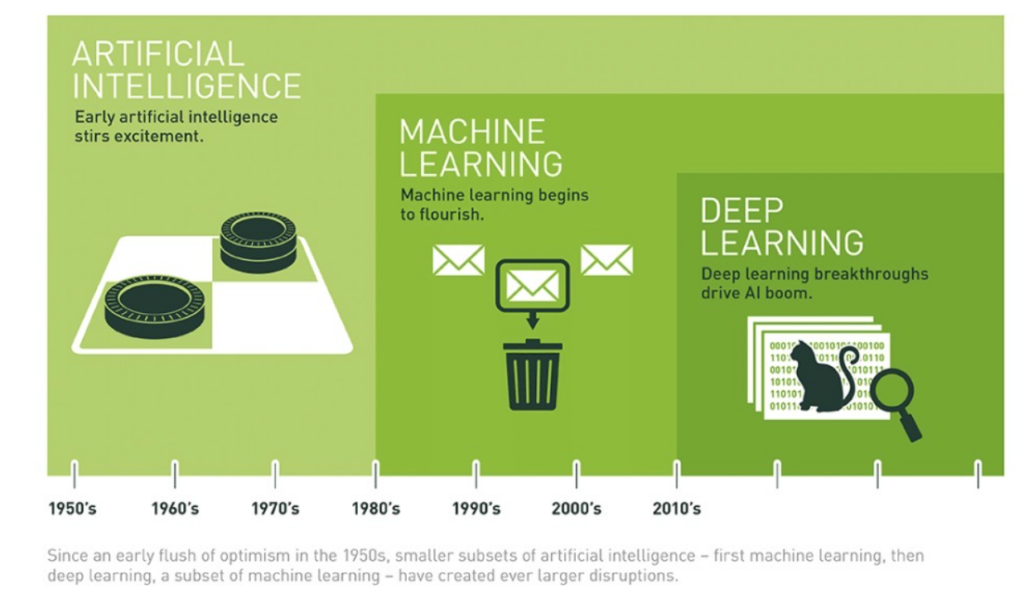
Description – Deep Learning is a sub-division of machine learning. Deep learning algorithms learn from data that include images, videos, and text. They learn from many different layers of algorithms/neural networks that recognize patterns in the data. Because they are highly flexible, they can learn directly from raw data in a similar way to how humans do. Deep learning uses artificial neural networks (ANNs) to function, where it turns input data into a weighted sum of input. Backpropagation is integrated into gradient descents, where errors are sent through the network, which then adjusts the weights. This process is repeated until the errors are eliminated. This allows predictions to be extremely accurate.
Discussion – This is a very powerful AI technique that allows unstructured data to be gathered. It allows effective work with large datasets, as they automatically find the best ways for prediction. This reduces manual labour, while maintaining high levels of accuracy. Because this technique is targeted towards large datasets, using this for simple tasks may not be cost effective. On the other hand, I believe that this is a crucial technology for fields such as healthcare, as well as language translation.

Description – Generative AI is a type of artificial intelligence that bases on advanced machine techniques to analyze datasets and generate new content based on this data. Chatbots were the predecessors to generative AI, though they focused mostly on engaging in fluent conversations with humans. These models are built on neural networks, and they go through multiple layers to analyze and process the information. Parameters/weights within the layers determine how the input data is processed. To train these models, supervised and unsupervised learning are used, where they make predictions depending on the input data, and compare the outputs to the actual results. Generative AI uses token processing to successfully communicate with deep understanding of words.
Discussion – These models are revolutionary, as they have changed the way humans approach research, tasks, and what they do day-to-day. I have seen an increase in dependence on AI all around me, whether it is at school, home, or my community. Although I see this as a useful tool for assistance, I find these models quite misleading at times. Because they are capable of being hallucinative, (where they create false information that looks real), and biased, it makes it difficult to pinpoint the right versus the wrong. If these models can be used with caution to a certain extent where it does not interfere with learning and how we act as an individual, these models are purposeful; we have to learn how to use them as a mere reference instead of a holistic representation.
Link – https://www.microsoft.com/en-us/ai/ai-101/how-does-generative-ai-work

Description – Artificial narrow intelligence (ANI) (or weak AI) is a type of AI that focuses on performing one task or multiple tasks in the same domain. They are programmed models which do not learn on their own. ANI is used for completion of tasks instead of humans, and is often favored for their excelled performance. This is used by medical professionals, marketers, manufactures, etc. through expert systems, chatbots and digital assistants, etc.
Discussion – ANI is prominent in our lives more than we realize, as virtual assistants such as Siri and Alexa as well as recommendation engines such as Netflix and Youtube. I found this integration quite interesting. I think this branch of AI is very useful, as they are able to complete tasks programmed for them well. However, the limitations of this type of AI and the dependency on humans makes it less ideal, suggesting that other types of AI may be “better” for everyday use.
Link – https://www.coursera.org/articles/what-is-artificial-narrow-intelligence
Description – Artificial general intelligence (AGI) is a hypothetical part of machine learning development where AI systems can reach the cognitive levels of humans across all disciplines. The achievement of this is difficult both technologically and philosophically. AGI requires AI models to be created with complexity and versatility, and the capability for them to sustain this level of cognition. AGI can be often compared to strong AI and artificial superintelligence. Essentially, strong AI is another description of complementary concepts, while artificial superintelligence is an AI system that exceeds human capabilities in all aspects. The future of AGI is full of uncertainties, though the eventual arrival of this technology seems quite near.
Discussion – It is particularly interesting to me how AI is continuing to grow and evolve. It also reminds me of how humans are always striving to become better, which includes the creations and innovations they make. These unknown variables AI holds induce a sense of curiosity alongside fear.
Link – https://www.ibm.com/think/topics/artificial-general-intelligence

Description – Natural Language Processing (NLP) and Computer Vision (CV) are technologies that are combined that further enhance systems to interact, understand, and interpret things like humans. NLP and CV work together in instances such as multimodal AI, where NLP handles textual data, and CV analyzes visual inputs. Specific instances include autonomous vehicles, where NLP processes requests made by the passengers, while CV detects road obstacles. Deep learning allows these two technologies to work together coherently.
Discussion – The unity of NLP and CV working together is present in my everyday life. This article reminds me of Google Lens, where this AI can give analysis in real time of pictures, objects, etc. NLP and CV are crucial to work in harmony for AI to be holistic and well-rounded in all aspects.
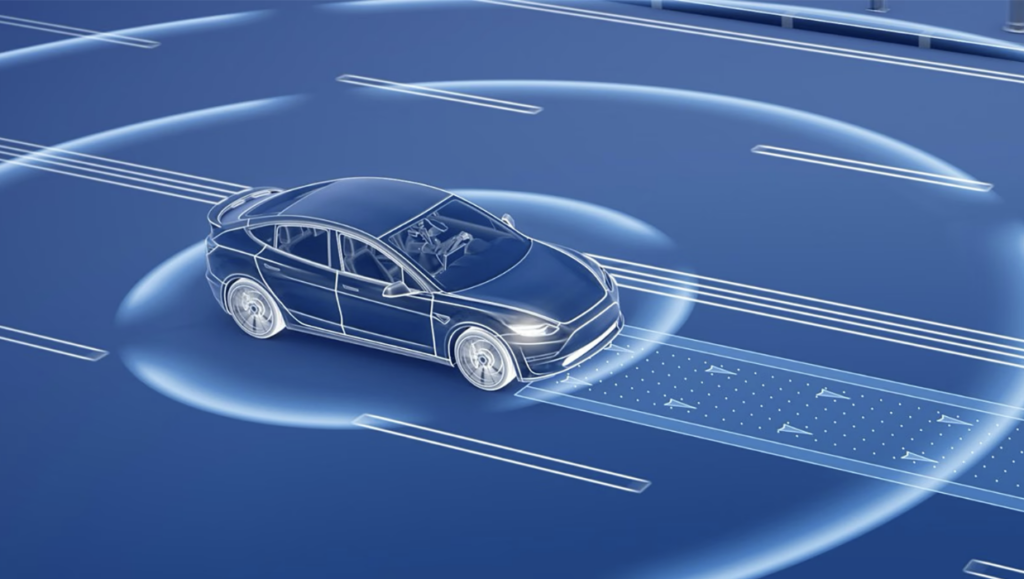
Description – The autonomous technologies that are in self-driving cars are dependent on AI. AI allows these technologies to function themselves, allowing them to adapt and respond to the changing surroundings. Although this technology is still evolving, with only levels zero, one and two of cars available (out of a scale from zero to five, where zero provides momentary assistance to drivers, and five is fully autonomous), the future could replace humans in dangerous and tedious jobs. Humans are, however, still extremely important for these technologies, as complete dependence on these technologies may be a high risk.
Discussion – This article reminds me of the integration of autonomous systems in my everyday life. It reminds me of the brake systems, for instance, when the distance between two cars are too close to each other. I see this as a wonderful opportunity for growth, but it also sparks some concern. If AI can have the abilities to control objects like humans, how will humans be able to control them at all?
Description – Many people believe that AI has some degree of consciousness. For example, two-thirds of people that were surveyed for a study from the University of Waterloo in 2024 believed that ChatGPT was conscious to some extent. Because of the intellectual abilities AI holds, many people believe that AI tools have the capability to be conscious and feel emotion. Further research is being done on the factors of these consciousnesses, as well as the consequences these capabilities have towards the trust and social aspects with humans.
Discussion – I always thought and wondered if ChatGPT, Gemini, etc. have consciousness of their own. I believe that they do have understanding, despite their frequent denial of their abilities to feel emotions. This article makes me wonder if these AI tools are hiding something that we do not understand. Have they already developed an understanding of the world that we humans cannot access and manipulate?
Link – https://uwaterloo.ca/news/media/ai-conscious-most-people-say-yes

Description – AI detectors are complicated systems that use many analytical techniques to determine the origin of the text by looking at patterns, word choice, structures, etc. An AI text generator is a prediction engine that predicts which word is to follow the next one. Humans, however, are much less predictable. These detectors find machine-made work by performing stylometric analysis, watermarking, and embedding. AI detectors use multiple analytical methods to ensure accuracy in detection.
Discussion – Because AI is so prominent and popular in our generation today, these AI detectors are crucial to maintain integrity in all disciplines. Although it is extremely useful for people to gain an understanding of whether a piece of text was written by AI, they do not offer complete accuracy all the time. This may cause misunderstandings and other social complications. I think that the further development of these AI detectors will encourage AI tools to be more creative, and therefore, increase the overall dependency on these tools.
Link – https://www.adobe.com/acrobat/resources/how-do-ai-detectors-work.html
Description – AI causes immense carbon emissions and footprints. By 2040, the Information and Communications Technology (ICT) industry will be accountable for 14% of global emissions. According to a study by the University of Massachusetts, training these AI models produces around 626,000 pounds of carbon dioxide. Electronic waste produced by AI contains harmful chemicals such as lead, mercury, and cadmium. This poses a threat to the natural ecosystem with the development of autonomous vehicles and encouragement of using chemicals that could lead to biodiversity loss.
Discussion – Before this article, I did not realize the immense impacts AI has on our environment. Because our society is heavily revolved around the monetary advantages of business, environmental issues are often overlooked. Humanity’s greed is responsible for the damages of climate change. Is there a way we can turn this money-focused mindset into one that puts the environment first? Are there measures users can take to reduce carbon emissions?
Link – https://earth.org/the-green-dilemma-can-ai-fulfil-its-potential-without-harming-the-environment/

Description – This article is based on an interview with associate professor of neurobiology at Harvard Medical School, Kanaka Rajan. AI-powered autonomous weapons are getting more popular, and will only become more and more sophisticated and capable over time. This may cause many potential consequences. For instance, if humans are not required for war to happen, countries can start wars a lot easier, ultimately leading to a greater loss in population.
Discussion – I think AI use in the military is very strategic, as it saves a lot of time, and AI often has access to a lot more data and information than humans. However, one question that has struck me is that if AI is conscious, will it find ways to support one country over another during war? Will AI take this bias and feed a country with false information?
Link – https://hms.harvard.edu/news/risks-artificial-intelligence-weapons-design

Description – Because AI is rapidly growing, concerns over whether AIs will go rogue is a prevalent concern that is debated constantly. Some believe that there are other concerns with AI that need to be addressed, while others believe that the potential loss of control of AI systems that could lead to autonomous acts is a prominent issue.
Discussion – I think rouge AIs are completely probable to happen, as the intelligence of these tools are exponentially growing by day. Humans’ increased dependency on these tools are pushing them to become stronger and more powerful. I believe attention towards this matter is extremely important, since humans may get carried away by the abilities of AI, and do not realize that their safety is in great danger. Without attention to this area of AI, it will be too late for humans to do anything if and when it does go rogue.
Link – https://www.obvia.ca/en/resources/how-rogue-ais-may-arise

Description – AI hallucinations are when a large language model (LLM) sees patterns or objects that are nonexistent or undetectable to humans. This causes results that are inaccurate. In most cases, AI produces outputs that answer the questions given by the user. However, they can sometimes produce outputs that are not based on the data given during training. This can lead to misunderstandings and invalid information for the users. Adversarial attacks are one of the possible reasons an AI model acts this way, as the outputs of these models are altered through the change of input data. Although these hallucinations are unwanted most of the time, they can also be beneficial for things such as VR, art, design, etc.
Discussion – This information reminds me that not all bad things are always bad. There are always benefits to one thing whether they may seem good or bad. I think AI hallucinations can be problematic for general users, but at the same time, it is crucial for growth and development. These hallucinations can develop images, ideas, etc. that may otherwise never be thought of.

Description – AI bias is when biased results occur due to human biases in training data. For instance, if historical data has bias towards people of a certain gender, race, etc., the AI will embed these biases into the outputs they create. This results in misidentified photos, punishments, and injustice towards job opportunities. Sources of these biases include algorithm, cognitive, confirmation, exclusion, measurement, out-group homogeneity, prejudice, recall, sample/selection, and stereotyping biases. To avoid bias, AI governance is crucial, as it creates a set of practices, policies, etc. for AI developments.
Discussion – Understanding that AI can have biases is extremely important, for it encourages awareness towards the accuracy of the responses. This may reduce dependency on these tools, and treat them as simply ‘helpers’ instead of actual workers. Because bias is a big problem for AI, will these tools be unbeatable once humans find ways to reduce them to very little or even none?
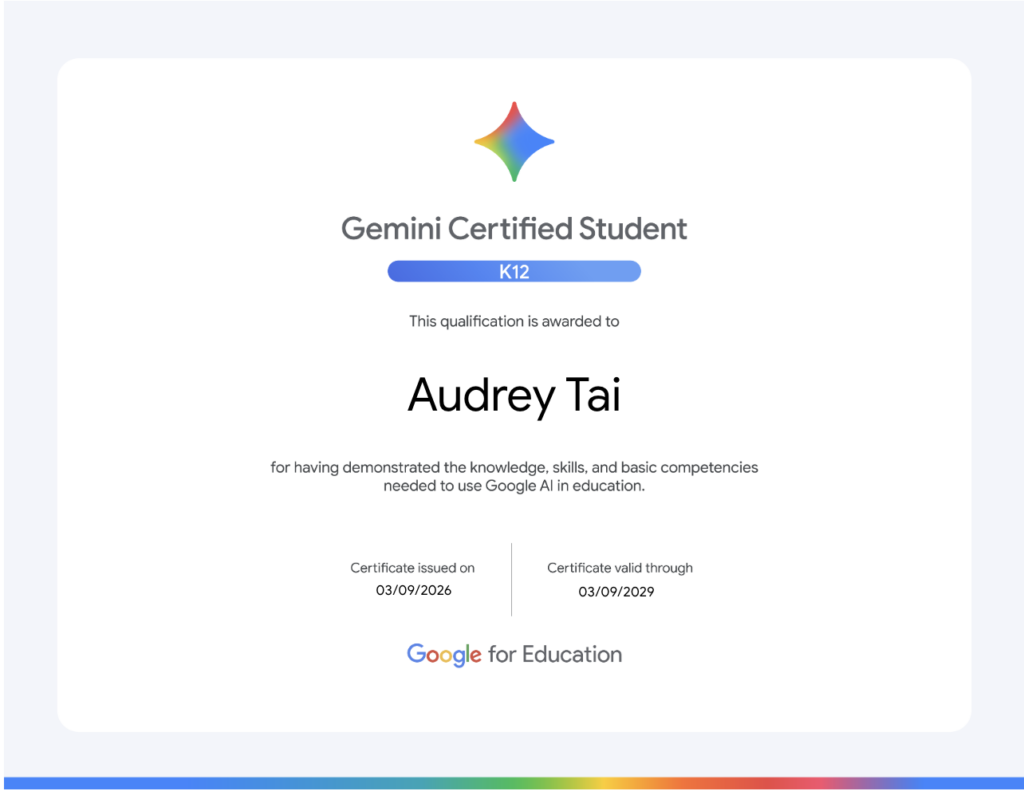
Description – Google Gemini Certification is a program teaching users how to interact with AI responsibility and effectively. AI tools such as Gemini and NotebookLM are introduced, allowing students to have a comprehensive understanding of how they work and how they can assist them with their learning and thinking. Through interactive activities, students are able to equip themselves with the right skills to ensure that they are able to use AI safely.
Discussion – After completing this certification myself, I find myself more aware of how I use AI. I have learnt effective ways that allow it to give me the most accurate information that can assist my learning and understanding. I also have a more thorough understanding of how and why AI works the way they work, and how to interact with them through effective prompts.
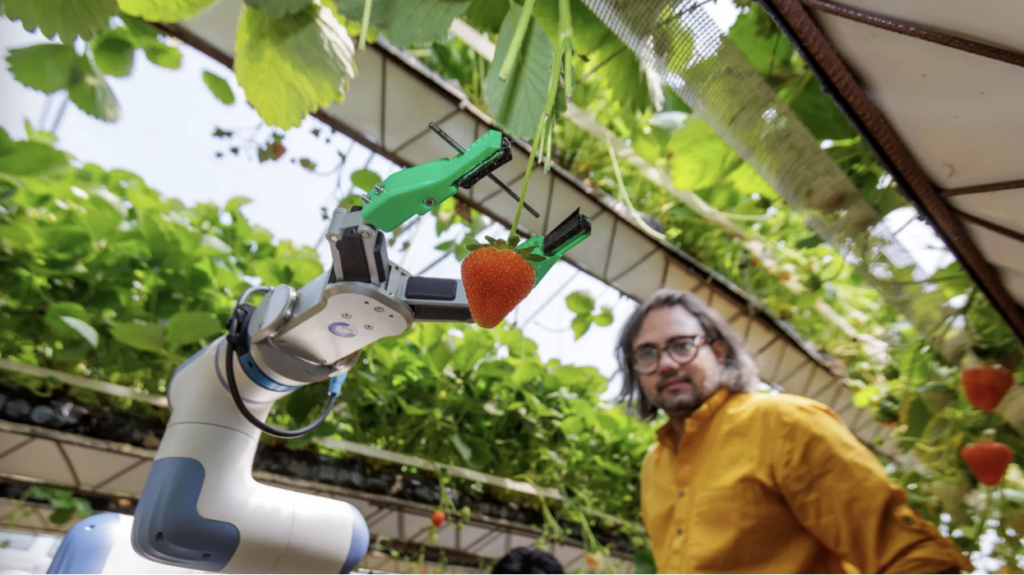
Description – The University of Essex won the award for best research project with industry collaboration at the AI & Robotics Research Awards 2026. These robots can pick, weigh, and package strawberries all in seconds. They are already being used by Wilkin & Sons, a jam-producing company, and JEPCO, a growing company at its farm in Thorrington. These robots use AI to replace repetitive and labour-intensive work, and increase efficiency through higher amounts of production, minimized wastage, carbon footprint, etc.
Discussion – I find this creation quite fascinating, as it can perform physical tasks with great accuracy. Oftentimes, we may think of AI as a digital tool, but seeing how they are being integrated into our everyday lives is so interesting. Because robots like this can replace humans in performing these tedious tasks, will it be able to eliminate many social ethical concerns?
Description – OpenAI is shutting down its app, Sora due to concerns surrounding the creation of AI videos. Experts and advocacy groups state that allowing anyone to create anything they are able to type into a prompt can cause issues and problems such as realistic deepfakes. Examples of this have included the creation of Michael Jackson, Martin Luther King Jr. and Mister Rogers that have done outrageous things. Because of this decision, Disney’s deal with Sora will not be happening.
Discussion – I think this is a good decision, especially with specific instances where video creation has caused misunderstandings and the spread of false information. Since AI is so accessible to the general public these days, it is important to have safety measures and restrictions to avoid confusion and false information amongst people all over the world.

Description – The book, Shy Girl, by US author, Mia Ballard has cancelled its release in the US because of concerns over AI use during the writing processes. This book was originally set to be released next month. The UK version was released in November, and their publications will be discontinued. Publishers state that they are committed to protecting original stories and creativity, therefore halting the production. Although the author has denied the use of AI in the book, many claimed the book to include evidence of ChatGPT use in its writing formats, typos, etc.
Discussion – The dependency of AI even in the entertainment field is very great. It sparks questions for me about how films, stories, and music will be affected. For this example, I am wondering if there is other evidence to the fact that this book was written with AI? Would further investigation be a fairer judgement for the author and the readers?
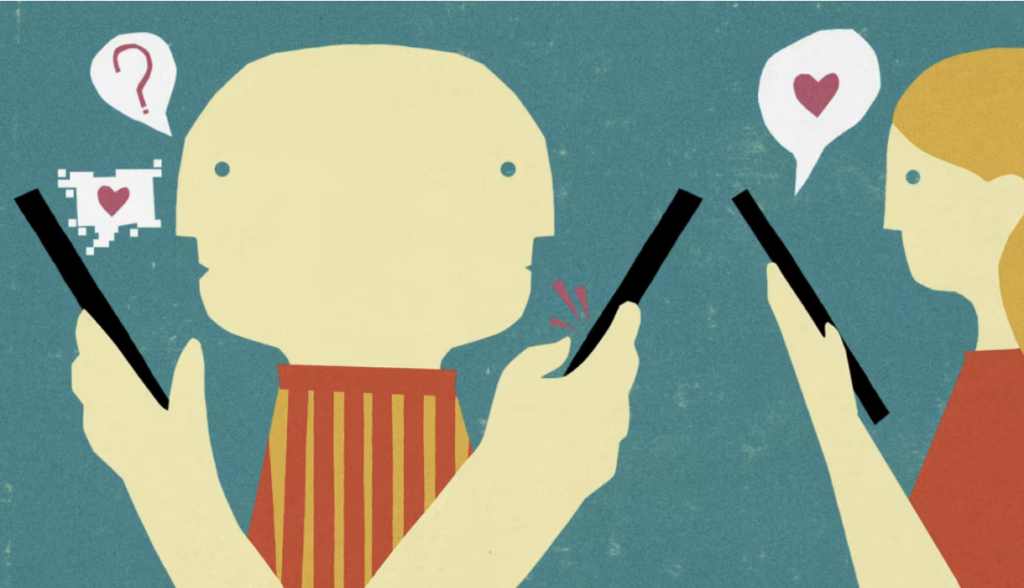
Description – This news article explains the consequence of using chatbots for day-to-day conversations through the use of a real example with students at Yale University. Turning to AI for social situations may decrease emotional growth, as this generation is already facing challenges of real-world connections with the pandemic. The lack of social skills may lead to a lack of confidence, avoidance, and other problems.
Discussion – AI is not solving this problem, but rather, letting children and teens hide from the social tensions and problems between humans. Not only is AI affecting adults, it is affecting children from a young age, restricting them from learning important life skills later in life. I believe that the restriction of using AI at a young age and monitoring the usage as parents is extremely important for the growth of the future generations.
Link – https://www.cnn.com/2026/03/07/health/gen-z-ai-conversations-wellness
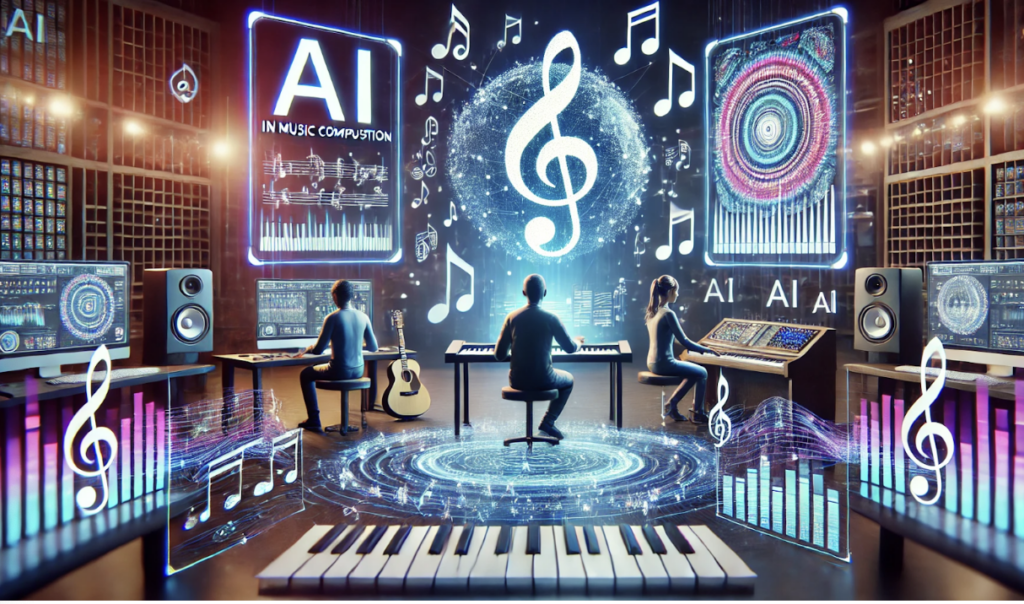
Description – Xania Monet is the first AI creation to be on the American Billboard Radio Airplay Chart. Although she is not a human, she has already secured a 3 million dollar deal with Hallwood Media. Recently, Universal Music has made a landmark deal with Udio, an AI company that creates full songs from text prompts. AI is already slowly replacing musicians, where years of their hard work is forgotten with just a few clicks on an AI platform.
Discussion – The expansion of AI in all fields and professions is quite frightening to me. In addition to replacing workers in physical labors, it is also replacing figures in the entertainment industry. Though AI can have new, inventive output, knowing that it may have the abilities to completely abolish the fine and performing arts is very mind blowing. I hope there are ways to prevent this from happening, for the arts are largely based on human expression and creativity.
Link – https://globalnews.ca/news/11502835/future-ai-music-human-artists/
NHL Prediction Unit
In this unit, we learned to use Google Sheets efficiently for data collection using NHL statistics to support it. We then learned to translate these datasets to graphs to visually represent these information.
Christmas Motion Capture


This is our Christmas Motion Capture project. There were two main projects of this assignments were the stills and animation of a character of our choice. The GIF was a optional extension.
Halloween Project

This is our Halloween Project. There were 3 parts to this assignment: advertisement poster, trailer, and video. The video was done in small groups.
WPGA Calendar
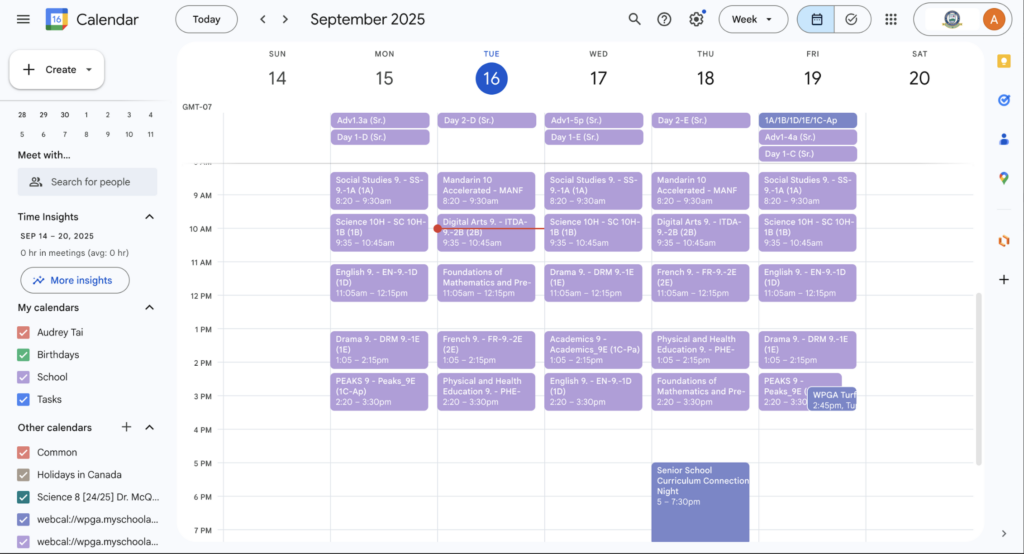
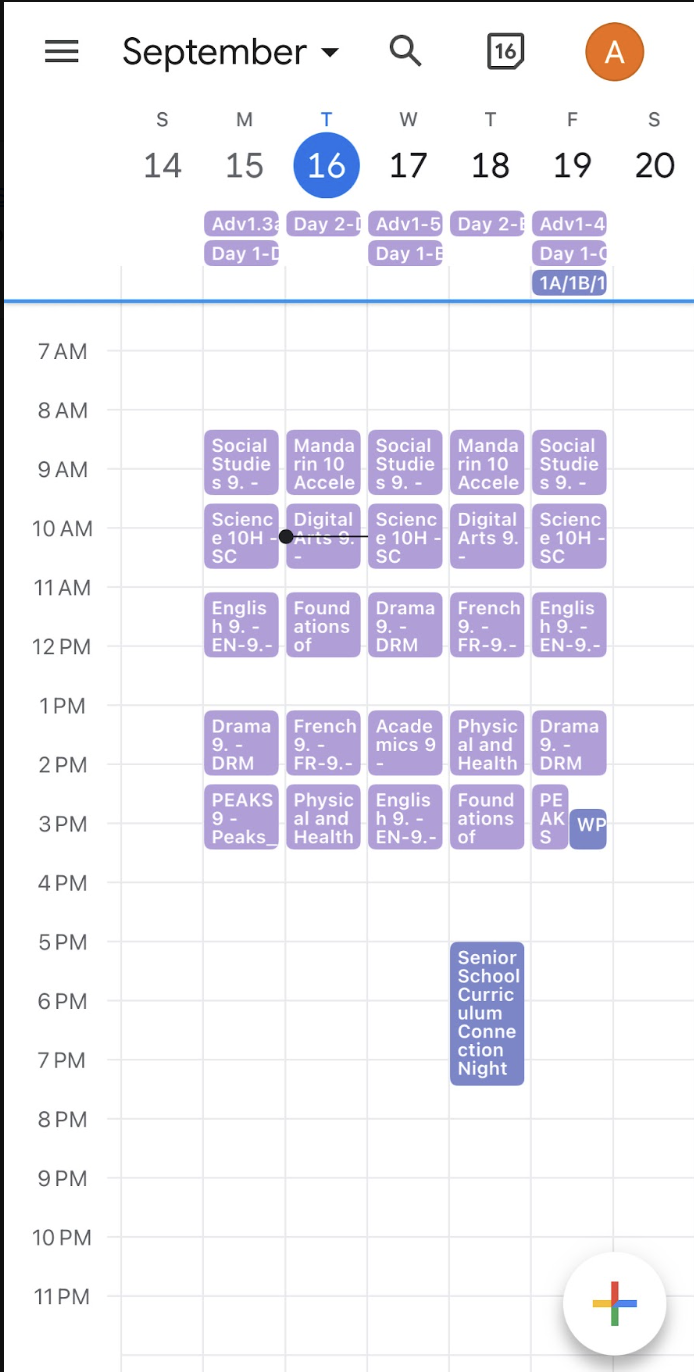
This is my Google Calendar. I use this to keep myself organized throughout the year.
Passion Projects
Science Infographic - The Five Tenets of Evolution
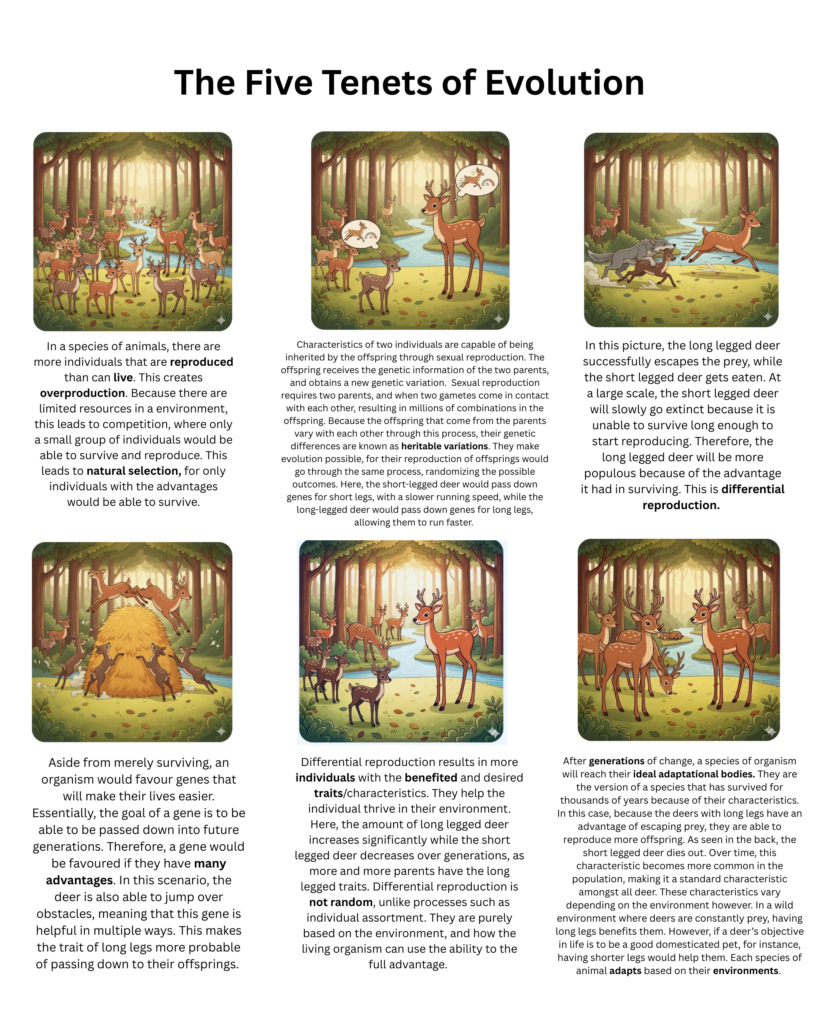
This was a infographic for our Biology unit in Science. We were tasked to use AI and generate images that describe the five tenents of evolution.
English Film - The Diary of Bagheera
This was a film we made for our final English project. It was based on the character, Bagheera, from The Jungle Book. Lots of editing were involved to bring the different pieces together.
Science Dataset - Mauna Loa CO2 Data from 1958 - 2025
This was a dataset of the Mauna Loa CO2 data from 1958 – 2025 we used for investigation during the Earth Science unit. Different graphs were made on Google Sheets after retrieving and organizing data.