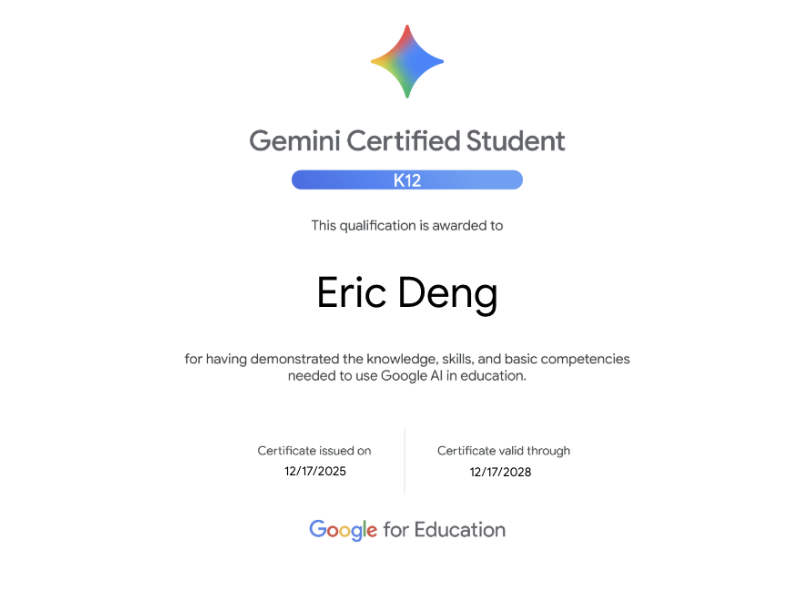
The Google Gemini Certification program was developed by Google for education purposes. Students would learn and be familiar with the skills of how to use generative AI responsibly and effectively. I find this to be a good way to educate people on how to use AI responsibly as I can use this to practice for my exams and tests. It also helps me answer questions that I am unsure about, and facts checks stuff too.
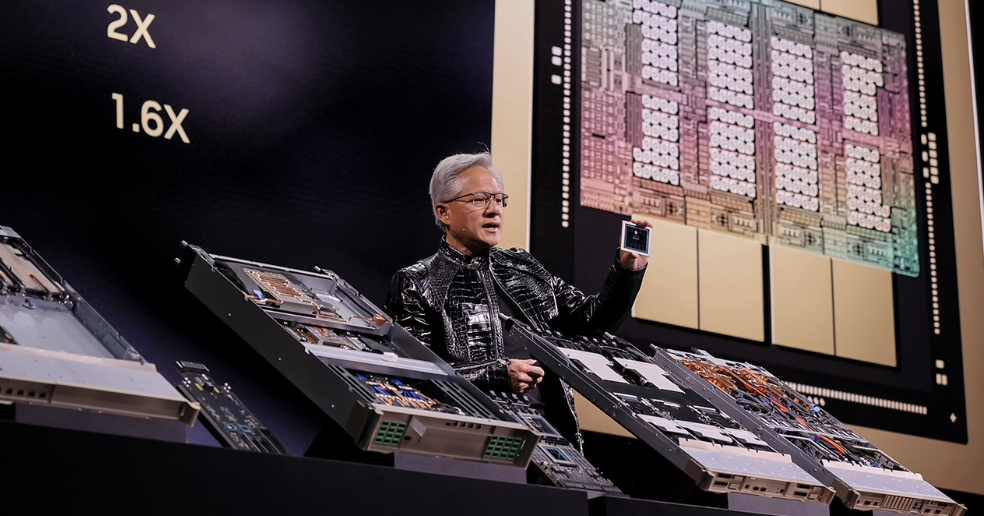
In January of 2026, NVIDIA launched the Rubin Platform, the successor to its Blackwell chips. It is named after the astronomer Vera Rubin and this new product includes the Vera CPU and Rubin GPU. It is designed to be 10x more efficient in running AI models than the previous versions. Allowing tech companies like Google and OpenAI to build ever larger, smarter and more powerful AI models that we could eventually use in our everyday lives. I find this to be very fascinating as this is one of NVIDIA’s breakthrough products. This invention benefits everyone that uses AI, as this will mean the AI tools will get faster, cheaper to run, and smarter intelligence. They are also very efficient meaning it could save a lot of electricity that AI data centers currently consume.
Nano Banana is a text to image and image to image generator model. It is designed to turn texts and imaginations into images that you can actually see. Unlike other older AI models, Nano Banana is capable of high fidelity text rendering and it also supports iterative refinement, which allows you to fix and edit the image until it is perfect. I use Nano Banana to help me with personal projects i’m doing and also school projects as well. It is very realistic and the iterative refinement feature allows me to get what I want and need. I can describe it in my own words and it’ll understand me no matter what. I think Nano Banana is also very smart at stuff as it refuses to generate images of inappropriate things such as political figures, and helps to prevent the spread of misinformation.
Perplexity AI is a search engine that uses AI to browse the internet and provide answers to questions. Unlike traditional search engines, Perplexity reads the websites and summarizes it for you. It also includes citations that you can use and verify so you know the information isn’t fake. I find Perplexity AI to be a life saver as sometimes I don’t want to read a whole news article. It helps me find actual trustable websites and also cite them at the same time. I also like how it summarizes information for me so I don’t have to waste spending my time reading the whole page.
As of early 2026, there have been reports from the International Energy Agency (IEA) and groups like the Little Hoover Commission have brought up a massive amount of electricity and water demand that are caused by AI data centers. Data centers in California and Ireland consume a significant amount of the total national power grid. Generative AI uses way more energy than a google search and it has led to new 2026 policies requiring tech companies to pay for grid upgrades so that regular households don’t see a spike in price for their bills. This news made me realize that every time I use AI, there is a cost to the planet. It has to use thousands of gallons of water for cooling and enough electricity to power a small city. I plan to now only use AI when needed and not waste computing things that I could easily do myself.
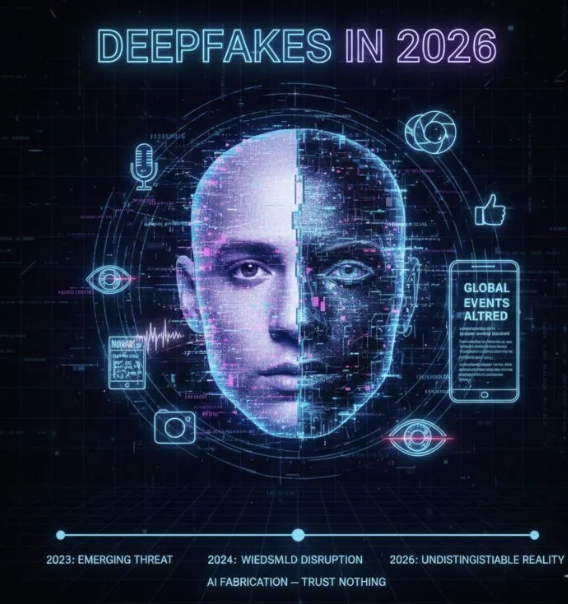
Since March 2026, OpenAI has announced plans to integrate the Sora video generator directly into ChatGPT to compete with GOogle’s Gemini 3. While this does make high quality videos accessible to everyone, it has affected things such as elections, deepfakes, causing things to be indistinguishable from reality. This has led to the EU to make the AI Act, which requires strict watermarking and labelling of all synthetic videos and pictures. This news was very shocking as I had consumed some of these videos and didn’t realize that some of them were fake. This changes reality as some elderly people or young people may not realize that it is fake and not real. Causing a spread of misinformation.
NotebookLM is an AI tool from Google that acts as a research partner. Unlike standard chatbots, NotebookLM helps you by creating a private and personal AI that answers you based on what you upload onto it. For example: class notes, PDFs, textbook chapters, etc. It also has a feature called Audio Overview which uses AI to create a two person, talking style conversion summarizing your notes. I feel like this is the most ethical way to use AI for school. This AI is not just telling you the answers but helping you learn based on the provided information and your skill level. The Audio Overview feature is also widely used as some people like to listen to stuff on top of learning. It helps students study without them feeling bored.
Base44 is an AI power platform that allows anyone to build a website within minutes. Instead of writing code like HTML, CSS, or JavaScript, users only have to simply describe what they want and then the AI builds it for them in minutes. I feel like this benefits normal citizens as we don’t need to spend four years learning a programming language just to test out a website idea. We can simply just describe what we want and let the AI build it for us.
In February and March 2026, an AI startup called Suno was sued by major labels such as Sony and Warner for using copyrighted music to train their models. Suno then signed licensing deals that allowed them to legally learn from artists in exchange for some revenue. This created a new system in which artists could get paid when an AI uses their style to create a song. This is a very big deal in the music industry, as artists are now getting paid without needing to do anything. At first I thought that this was sort of stealing voices from famous artists, but now that there are licensing deals, I feel better knowing that they get paid. However smaller artists are still left out, and I feel like they should also get the same treatment as bigger artists.
Claude, created by Anthropic, is widely recognized as the most articulate and human-sounding AI assistant available. Unlike other models that can feel robotic, Claude is praised for its exceptional reasoning, advanced coding capabilities, and sophisticated writing tone. Anthropic builds Claude using a system called "Constitutional AI," which trains the model on a specific set of ethical principles to ensure its outputs are helpful and safe. Its standout feature, Artifacts, opens a dedicated workspace next to the chat so users can see, test, and tweak code, websites, or documents in real-time. Honestly, Claude is my favorite AI to use because it doesn’t talk like a robot or use those super cliché "AI words" that teachers spot instantly. It feels like chatting with a really smart friend who actually gets my writing style and helps me fix my essays without taking over my voice. When I’m stuck on a tough concept for class, it breaks things down in a way that actually clicks, rather than just spitting out a wall of text. Ethically, knowing it was built from the ground up with strict safety guidelines makes me trust it a lot more when I'm using it to brainstorm or double-check my work. It feels like a tool meant to help me learn, not just a cheap way to cheat.
Khanmigo is an educational AI assistant built directly into the Khan Academy platform. Unlike standard chatbots that simply spit out direct answers, Khanmigo acts like a personal tutor by using the Socratic method. It intentionally refuses to complete homework assignments for you; instead, it asks guided questions, drops helpful hints, and breaks down complex math, science, and history concepts to help you figure out the solution yourself. I really like Khanmigo because it forces me to actually understand what I'm learning instead of letting me lazily copy a response. When I’m studying for a massive math test and get stuck on a problem, it walks me through my mistakes step-by-step without giving away the final answer. Ethically, it makes me feel good about using AI for my schoolwork because it acts as an actual study partner that helps me build real skills, rather than a tool used for cheating.
Goblin.tools is a collection of free, simple, single-task AI utilities specifically designed to help people manage executive dysfunction and task paralysis. Its flagship feature, Magic ToDo, takes a single overwhelming goal like writing a research paper draft and automatically slices it into an itemized, realistic list of tiny, manageable subtasks. It also includes features like the "Formalizer" to adjust text tone and an "Estimator" to guess how long a chore will take. This tool is an absolute lifesaver whenever I have massive project deadlines and feel completely frozen because I don't know where to start. Instead of staring at a blank screen and panicking, I can put my assignment into Magic ToDo and it hands me a checklist of bite-sized steps that I can finish one by one. It relates to my life by taking the anxiety out of heavy school weeks, making it a great example of using AI for personal organization and stress relief.
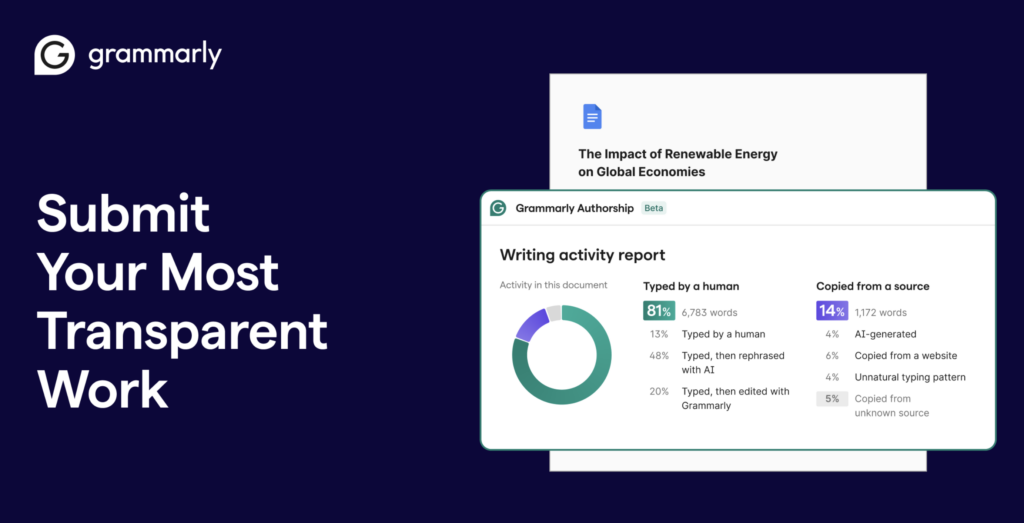
In response to the widespread use of generative text in schools, Grammarly rolled out an updated "Authorship Indicator" system. This AI feature tracks your typing behavior, editing patterns, and text revisions in real-time as you write an essay. Instead of just catching typos, it compiles a verified report that proves exactly which parts of the essay were written by your own hand, which parts were adjusted by AI suggestions, and if any sections were completely copy-pasted. This news is a major relief for me because AI detectors can sometimes falsely accuse students of cheating even when they wrote the whole paper themselves. Having a tool that tracks my actual writing process gives me a foolproof way to prove to my teachers that my work is completely authentic. Ethically, it sets a clear boundary between using AI as a helpful editor to clean up my grammar versus letting an AI ghostwrite the assignment for me.
Duolingo Max is a premium subscription tier that integrates advanced generative AI to provide real-world language practice. It features two major tools: Roleplay, which lets students text with AI characters in simulated real-life scenarios (like ordering coffee in Paris), and Explain My Answer, which gives personalized, conversational breakdowns of why a specific grammar mistake was made instead of just telling you that you were wrong. This tool completely changes how I practice languages for school because it doesn't just feel like memorizing flashcards anymore. I can actually test my skills by having a realistic, fake conversation with the AI without the anxiety of messing up in front of a real person. Ethically, it's a great use of AI because it doesn't do the work for me; it forces me to think on my feet and provides an instant tutor explanation when I get confused on a quiz or translation assignment.
Gamma is an AI-powered design tool that generates polished slide decks, documents, and web pages from simple text prompts or uploaded notes. Instead of forcing users to manually format text into individual slides, Gamma's AI handles the layouts, color schemes, and visual alignment instantly. Users can then use an AI chat sidebar to request specific structural edits, like "turn this list into a three-column layout." Gamma is a total game-changer when I have to build an oral presentation for class and don't want to spend five hours fighting with text alignment in PowerPoint. It lets me put all my focus into writing good research, and then the AI handles the stressful design part. From an ethical standpoint, it's great as long as I use my own factual notes to feed it, ensuring the presentation remains my own intellectual work while the AI just acts as a fast graphic designer.
Adobe Firefly is a family of generative AI models integrated into creative apps like Photoshop and Illustrator. Unlike other image generators that scrape the open web, Firefly is trained exclusively on openly licensed images, public domain content, and Adobe Stock. This creative tool supports text-to-image creation, generative fill, and text effects while automatically embedding "Content Credentials" to prove it is AI-generated. I use Firefly when I need high-quality visuals for graphic design assignments or poster layouts. It makes me feel much more comfortable using AI art because I know it was trained legally on licensed images rather than stealing work from random artists online. It gives me a clean, ethical baseline to explore my imagination and generate unique elements for my creative projects without crossing copyright boundaries.
Replit Agent is an advanced development assistant that builds complete web applications from plain English prompts. Unlike basic completion tools, the Agent manages full-stack infrastructure, including databases, backend servers, and user authentication. It operates in a continuous loop: planning the project architecture, writing the code, running a browser to test its own creation, and automatically debugging errors as it works. This tool is amazing because it acts like a senior software engineer looking over my shoulder when I'm trying to prototype an app idea. Instead of getting stuck on a missing semicolon or database configuration for hours, I can describe the problem to the Agent and watch it think through the steps to fix the bug. It changes how I learn computer science because I can focus on big-picture design and logic while the AI takes care of the repetitive setup.
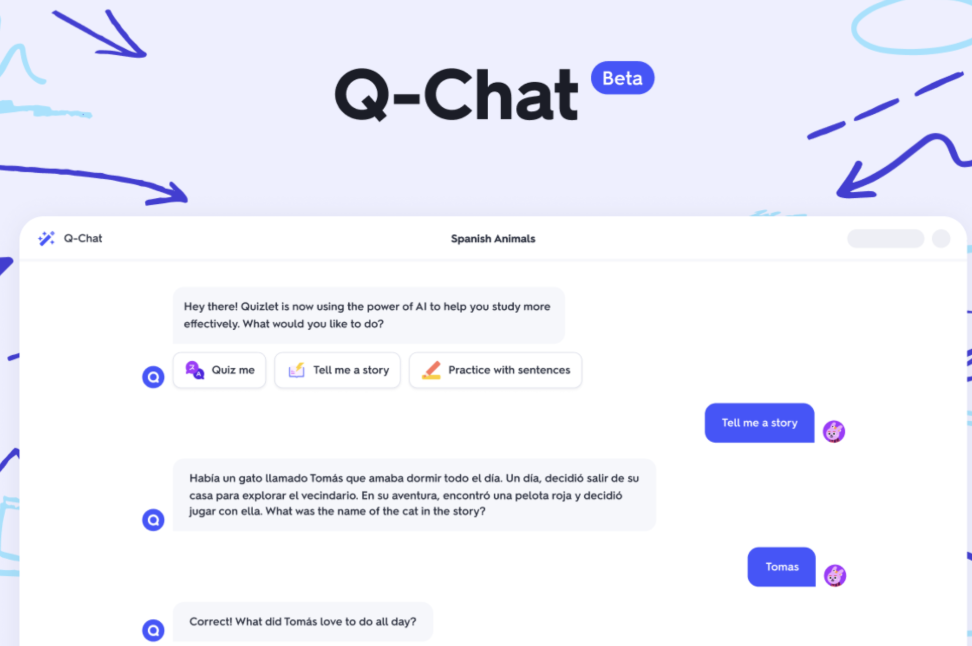
Q-Chat is an interactive AI study coach built directly into Quizlet's study platform, powered by OpenAI's technology. Rather than letting students simply flip through flashcards passively, Q-Chat engages them in a critical-thinking conversation. It quizzes users on their study sets, asks deep follow-up questions to test actual comprehension, tells fun stories to help apply concepts, and automatically adjusts its difficulty based on the student's answers. Q-Chat helps me study way more effectively because it stops me from just memorizing definitions word-for-word without actually knowing what they mean. It essentially turns a boring, static deck of vocabulary cards into a dynamic conversation where I have to explain my thoughts out loud. It relates directly to my daily routine by making study sessions shorter and much more engaging, giving me an honest check on whether I'm truly ready for an exam.
Otter.ai is an automated note-taking tool that listens to live conversations, lectures, or virtual meetings and generates real-time, interactive transcripts. The AI automatically identifies different speakers, tags key concepts into searchable summaries, and captures shared presentation slides to embed them directly alongside the text notes for context. As a student, using Otter is a massive relief during long, fast-paced lectures where it's impossible to type fast enough to catch everything the teacher says. By letting the AI handle the raw transcription, I can actually focus my mind on listening and participating in class instead of staring down at a notebook. It helps me organize my study life because I can go back later, search for a specific word, and immediately jump to that exact part of the lesson audio.
Microsoft Copilot is an AI assistant deeply embedded into everyday software like Word, Excel, PowerPoint, and Outlook. Built on advanced language models, it helps users draft text, analyze spreadsheet data, generate slide decks from outlines, and summarize long email chains. A powerful update allows users to choose between different AI processing modes like "Instant" for fast, everyday answers or "Thinking" for deep, multistep problem solving and technical tasks. Copilot is probably the most well-known and practical AI tool I use because it's built right into the apps I already use for school every day. When I have a huge stack of emails from teachers or group project members, it saves me a ton of time by giving me a quick summary of what needs to get done. I also love using it in Word to rewrite awkward paragraphs when I get stuck. Ethically, it's super helpful because it acts as a built-in assistant to format and polish my assignments, letting me focus on the actual ideas without getting bogged down by the formatting.